


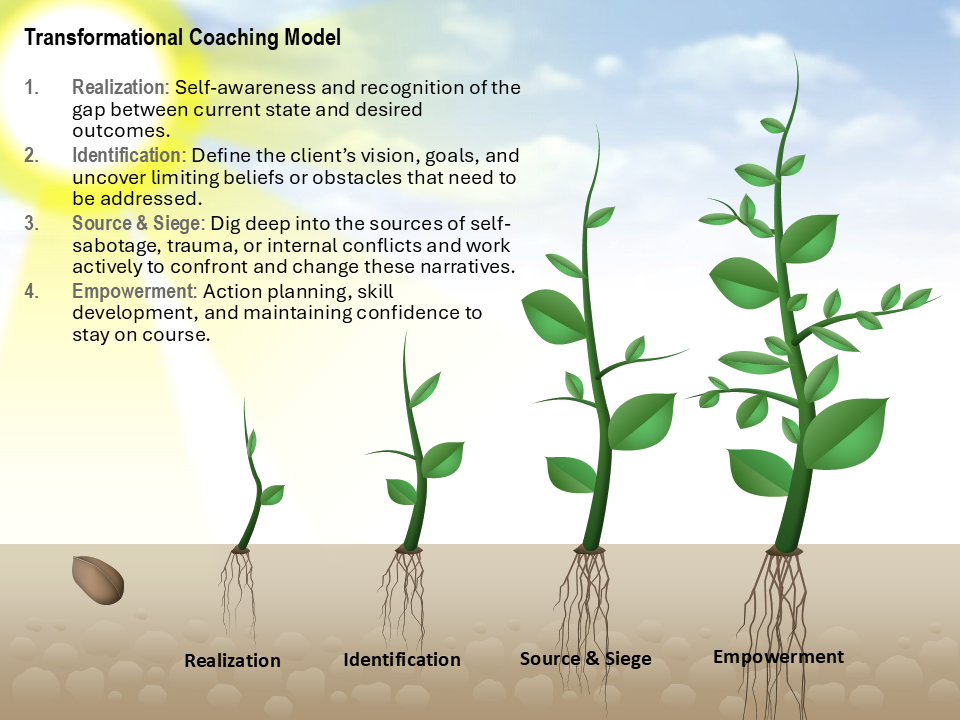
This is our Transformational Coaching Model based on four core stages: Realization, Identification, Source & Siege, and Empowerment. This model is designed to guide individuals through a structured process of self-awareness, discovery, and action, ultimately leading to meaningful and sustainable change.
1. Realization
Objective: Creating Awareness
In the Realization phase, the client becomes aware of their current situation, recognizing the need for change. This could stem from dissatisfaction in personal or professional life, a desire for growth, or the recognition of limiting patterns. This stage is about facing reality, understanding where they are, and acknowledging the gap between their current state and desired goals.
- Key Focus: Self-awareness and recognition of the gap between current state and desired outcomes.
- Example: A client may realize they are feeling unfulfilled in their career despite outward success, prompting the desire to explore deeper issues and work toward change.
2. Identification
Objective: Clarifying Goals and Barriers
In this step, the client works on clearly defining their goals, aspirations, and vision for the future. It’s also the stage where obstacles, such as limiting beliefs, fears, and negative thought patterns, are identified. This phase is essential for understanding what is holding the client back and what specific outcomes they want to achieve.
- Key Focus: Define the client’s vision, goals, and uncover limiting beliefs or obstacles that need to be addressed.
- Example: The client may identify a fear of failure that prevents them from pursuing a passion project or a long-desired career shift.
3. Source & Siege
Objective: Addressing the Root Causes
This is the transformational core of the model, where the client examines the root causes of their barriers. The term Source refers to identifying the origins of limiting beliefs or negative behaviors—whether from past experiences, internalized societal expectations, or learned behaviors. Siege represents the effort to challenge, disrupt, and dismantle these limitations.
- Key Focus: Dig deep into the sources of self-sabotage, trauma, or internal conflicts and work actively to confront and change these narratives.
- Example: A client may discover that childhood experiences of being criticized led to perfectionism and fear of rejection. Through coaching, they work on reframing these beliefs to stop the cycle of self-doubt.
4. Empowerment
Objective: Taking Action and Sustaining Change
In this final phase, the client steps into their new empowered self, armed with the insights and strategies developed in the previous stages. They create a clear action plan to move forward, with a focus on building confidence, developing new skills, and maintaining positive habits. The empowerment stage is not only about taking action but also about sustaining progress through accountability and continuous reflection.
- Key Focus: Action planning, skill development, and maintaining confidence to stay on course.
- Example: A client who has conquered their fear of public speaking begins to volunteer for leadership roles, gives presentations, and continues to seek out opportunities that challenge and expand their comfort zone.
Summary of the Model:
- Realization: Awareness of the current state and the need for change.
- Identification: Clarifying goals and uncovering barriers to growth.
- Source & Siege: Identifying the root causes of barriers and challenging them.
- Empowerment: Taking action, building new habits, and sustaining growth.
This model provides a structured, yet flexible, framework for transformational coaching, enabling clients to navigate through their self-discovery process, confront obstacles, and step confidently into the next phase of their lives.